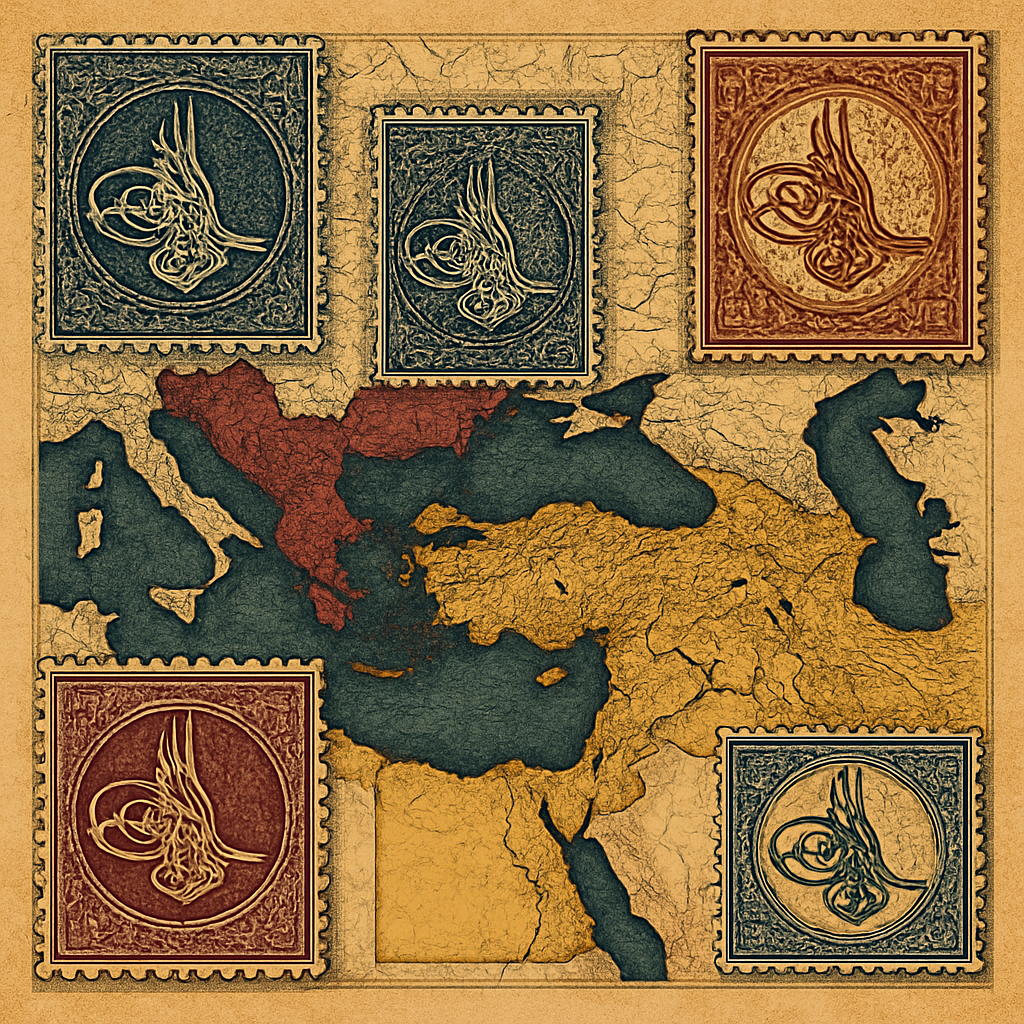
Introduction to the Ottoman Empire’s Postal History
The Ottoman Empire, a vast and diverse realm that spanned over six centuries, left behind a rich legacy not only in history but in philately as well. The postal history of the Ottoman Empire, especially during its final years in the early 20th century, offers a fascinating glimpse into the socio-political complexities and the multicultural fabric of the empire. Ottoman stamps from this era serve as tangible witnesses to the empire’s decline and the turbulent times leading to its dissolution after World War I.
Historical Context: The Ottoman Empire in the Early 20th Century
By the early 1900s, the Ottoman Empire was often described as the “sick man of Europe.” It was grappling with internal dissent, nationalist uprisings, and external pressures from European powers. The empire’s vast territory stretched across parts of modern-day Turkey, the Middle East, North Africa, and the Balkans, hosting a mosaic of ethnic and religious communities.
During this period, the empire underwent significant reform attempts under the Young Turks movement and later faced the devastation of World War I, which ultimately led to its collapse. These political upheavals and territorial losses were reflected vividly in the empire’s postal issues and the stamps produced during these years.
Early Ottoman Stamps: Foundations of a Postal System
The first Ottoman stamps were issued in 1863, featuring the tughra, the sultan’s calligraphic signature. These stamps were primarily utilitarian but also symbolized the empire’s modernization efforts, including establishing a formal postal system that connected its diverse provinces.
By the early 20th century, the design and production of Ottoman stamps had evolved to include multiple denominations, inscriptions in Ottoman Turkish (using Arabic script), and occasionally French, reflecting the empire’s international connections and internal diversity.
Design Elements Reflecting Empire’s Identity
Ottoman stamps from this period often featured intricate calligraphy, imperial symbols such as the crescent and star, and motifs inspired by Islamic art. These elements were not only decorative but also served to project the authority and cultural heritage of the empire during a time of political uncertainty.
Multiculturalism Through Postal Issues
The Ottoman Empire’s population was a patchwork of Turks, Arabs, Armenians, Greeks, Kurds, Jews, and many other groups. This diversity was mirrored in the postal system and its stamps. Post offices in different regions sometimes issued stamps with localized overprints or inscriptions in multiple languages.
For instance, in certain Arab provinces, stamps bore Arabic overprints or were used alongside French-language postal materials, demonstrating the linguistic and cultural plurality within the empire. Collectors today find these variations particularly valuable as they reveal the geographic and ethnic complexities of Ottoman administration.
Postal Services and International Relations
During the empire’s final years, foreign postal offices operated within Ottoman territory, including those of Austria-Hungary, France, Germany, and Britain. These extraterritorial post offices used their own stamps but sometimes also overprinted Ottoman stamps. The coexistence of these systems highlights the empire’s declining sovereignty and the influence of European powers.
Political Struggles and Their Impact on Postal Issues
The early 20th century was marked by political upheaval. The Young Turk Revolution of 1908 promised modernization and constitutional reform, which was reflected in new stamp issues celebrating progress and the Ottoman identity.
However, the Balkan Wars (1912-1913) and World War I brought territorial losses and instability. Stamps from occupied regions or those produced during wartime often show overprints, surcharges, or provisional designs, indicative of administrative challenges and shifting control.
Notable Stamp Issues from the Era
- 1908 Young Turk Commemoratives: Celebrating the reinstatement of the constitution, these stamps featured portraits of Sultan Mehmed V and symbolic motifs of renewal.
- Arabic Overprints: Issued in Arab provinces such as Syria and Palestine, these overprints signify localized administration and cultural identity.
- War-Time Provisional Issues: Due to shortages and territorial changes, provisional stamps and overprints were common, reflecting the empire’s fragmentation.
Collector Tips: Identifying and Preserving Ottoman Stamps
For philatelists, Ottoman stamps from the final years offer a rich field of study but also present challenges due to language barriers, overprint variations, and fragile materials.
- Language and Script: Familiarity with Ottoman Turkish and Arabic scripts is crucial for identifying inscriptions and overprints accurately.
- Overprint Variations: Collectors should carefully examine overprints for differences in font, color, and position, as these can significantly affect a stamp’s rarity and value.
- Condition and Preservation: Given their age and paper quality, Ottoman stamps require careful storage away from humidity and light to preserve colors and prevent deterioration.
- Provenance and Documentation: Whenever possible, acquiring stamps with clear postal history, such as covers or cancellations, enriches their historical context and collector interest.
Interesting Anecdotes from the Postal History
One fascinating story involves the use of Ottoman stamps in the Hejaz Railway area, where stamps were overprinted with "Hedjaz" during the Arab Revolt (1916-1918). These overprints are prized by collectors as they symbolize the rising nationalist movements that contributed to the empire’s collapse.
Another anecdote is the use of "Tughra" stamps during World War I in the Dardanelles campaign. Soldiers and civilians alike sent letters bearing these stamps, which now serve as poignant reminders of one of the empire’s most significant military engagements.
The Legacy of Ottoman Postal History
The postal history of the Ottoman Empire’s final years is more than a niche interest for stamp collectors; it is a window into an empire’s struggle to maintain unity amid diversity, modernization efforts, and eventual collapse. Each stamp tells a story of cultural coexistence, political change, and historical transformation.
Today, these stamps are preserved not only as collectibles but as artifacts documenting a pivotal era in Middle Eastern and world history. For collectors and historians alike, the Ottoman Empire’s postal issues remain a rich source of insight and fascination.
Conclusion
The Ottoman Empire’s early 20th-century stamps offer an extraordinary narrative of a multicultural empire navigating political turmoil and modernization. From intricate calligraphy to overprints reflecting regional identities and wartime exigencies, these stamps serve as enduring witnesses to the empire’s decline and the dawn of a new geopolitical era. For philatelists and historians, exploring these postal relics is both a rewarding challenge and a profound journey into the past.