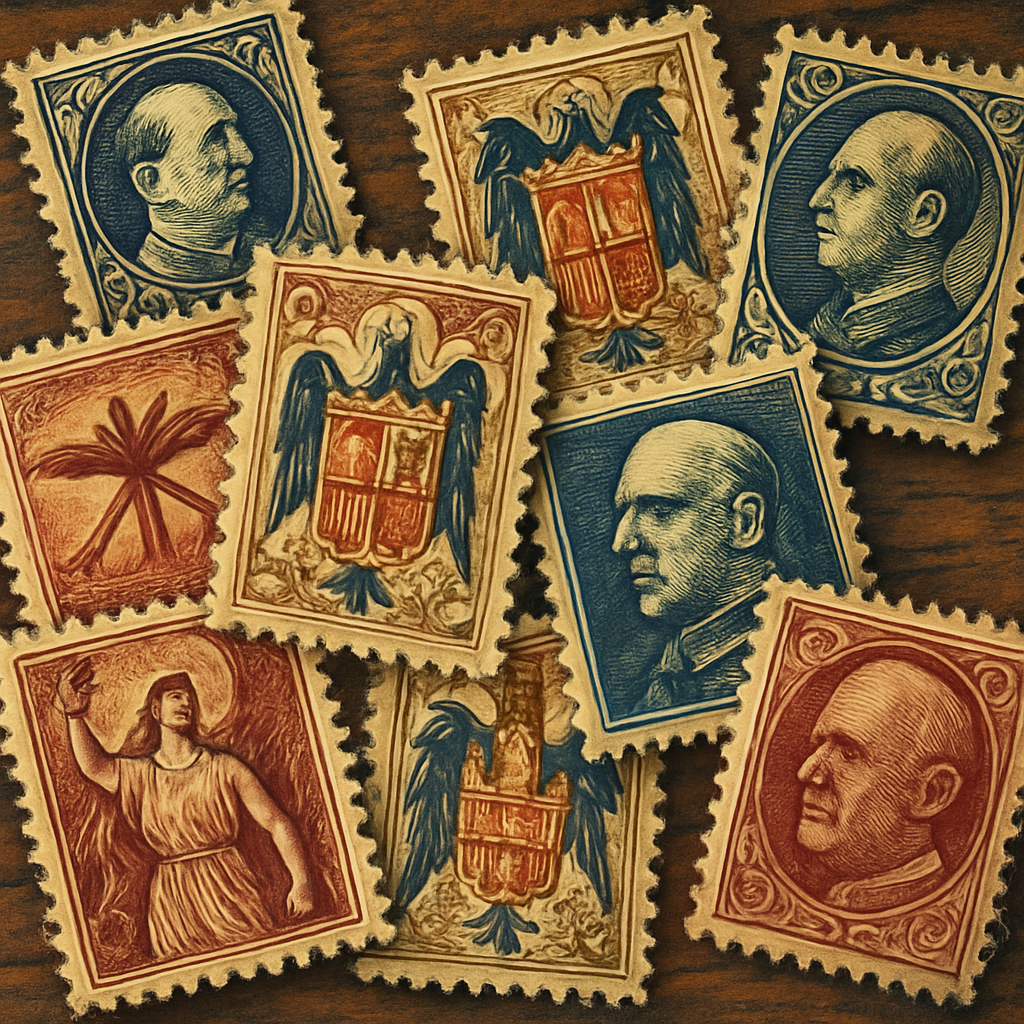
The Spanish Civil War: An Overview
The Spanish Civil War (1936-1939) stands as one of the most pivotal and tragic conflicts of the 20th century, marking a brutal confrontation between the Republican government and the Nationalist insurgents. This war was not merely a military struggle but a clash of ideologies, social orders, and international interests. The conflict devastated Spain socially, economically, and culturally, leaving deep scars that lasted for decades. Beyond the battlefield, the war was fought in many arenas, including propaganda disseminated through various media — notably postage stamps.
Postage Stamps as Political Instruments
During the Spanish Civil War, postage stamps were far more than tools to prepay mail; they became potent instruments of political propaganda and national identity. Both the Republican and Nationalist factions issued stamps that conveyed their ideological messages and rallied support. Collectors today find these stamps fascinating artifacts that reflect the emotional intensity, symbolism, and propaganda efforts of a deeply divided nation.
The Role of Stamps in Propaganda
Stamps served multiple purposes during the war:
- Symbolism: Emblems, portraits, and slogans on stamps projected the values and legitimacy claims of each side.
- Morale Boosting: Issuance of new stamps was a sign of functional governance and resilience.
- International Messaging: Stamps were a subtle tool to appeal to foreign sympathizers and governments.
As a result, stamps from this period are rich historical documents that reveal much about the political climate and cultural sentiments.
Republican Stamps: Symbols of Democracy and Resistance
The Republican government, which represented a coalition of left-wing parties including socialists, communists, and anarchists, issued stamps that emphasized democracy, social justice, and resistance against fascism.
Design Themes and Motifs
- Portraits of Republican Leaders: Figures such as Manuel Azaña, the President of the Republic, and other prominent Republicans appeared on stamps to assert legitimacy.
- Republican Symbols: The tricolor flag (red-yellow-purple) of the Second Spanish Republic was a common motif, symbolizing the democratic state.
- Worker and Peasant Imagery: Stamps depicted laborers, farmers, and industrial scenes highlighting the social base of the Republican cause.
- Peace and Anti-Fascist Messages: Some stamps carried slogans or imagery promoting peace and resistance to the rising tide of fascism in Europe.
Notable Issues and Historical Context
One of the most famous Republican stamp issues was the 1937 “Madrid Defense” series, issued during the critical siege of Madrid. These stamps featured images of fortifications, workers, and the iconic Republican flag, symbolizing the city’s determined resistance. They served both practical postal functions and as morale boosters for the beleaguered population.
In addition, the Republicans issued stamps commemorating international brigades — foreign volunteers who traveled to Spain to fight fascism. These issues underscored the international dimension of the conflict.
Nationalist Stamps: Heralding a New Order
The Nationalist faction, led by General Francisco Franco, represented conservative, monarchist, and fascist elements seeking to overthrow the Republic and restore traditional social order. Their stamps reflected themes of authority, religion, and national unity under a single leader.
Iconography and Messaging
- Portraits of Franco: As the war progressed, stamps increasingly featured General Franco’s image, underscoring his role as the emergent head of state.
- Religious Symbols: Catholic symbolism, such as crosses and images of saints, appeared frequently, reinforcing the Nationalists’ alliance with the Catholic Church.
- Military and Nationalistic Imagery: Stamps showed soldiers, eagles, and traditional Spanish heraldry to evoke strength and patriotism.
- Rejection of the Republic: Some issues explicitly distanced the Nationalists from Republican symbols, promoting a narrative of restoration and order.
Important Stamp Series
The 1937 “Victory” issue is particularly notable, commemorating Nationalist military successes. The stamps featured Franco’s portrait and the traditional Spanish coat of arms, symbolizing the promise of a unified Spain under authoritarian rule.
Additionally, the Nationalists issued airmail stamps and overprints on existing Republican stamps, effectively asserting control over postal services in the territories they held.
Collecting Spanish Civil War Stamps: Tips and Insights
For philatelists, stamps from the Spanish Civil War era offer a window into a complex historical moment. However, collecting these items requires knowledge and care.
Authentication and Condition
- Beware of Forgeries: Due to their historical significance, many Civil War stamps have been forged. Collectors should purchase from reputable dealers and, when possible, seek expert verification.
- Condition Matters: Mint condition stamps with original gum are rare and highly valued. However, used stamps with clear cancellations can also be historically significant.
Understanding Postal Markings and Overprints
During the war, many stamps were overprinted to signify control by one faction or the other, and postal cancellations can indicate the region and date of use. Collectors should study these markings to better understand the provenance and context of each stamp.
Regional Variations
Spain’s fragmented control during the war led to various local and regional stamp issues, especially in Republican-held territories. These often have unique designs and are sought after for their rarity and historical significance.
Recommended Resources
- Specialized catalogs on Spanish Civil War philately
- Historical texts detailing the political background
- Philatelic societies focusing on Spanish or wartime issues
Historical Anecdotes and Lesser-Known Facts
One intriguing anecdote involves the Republican issuance of stamps depicting the “Dove of Peace” during the height of conflict — a poignant symbol of hope amidst turmoil. Ironically, these were used when the war’s brutality was escalating.
Another fascinating fact is that some Nationalist stamps were printed abroad, in countries like Germany and Italy, reflecting the international support Franco received from fascist regimes.
Additionally, the war saw the use of clandestine postal services and stamps in besieged cities, which today serve as rare collectibles and testimonials of civilian resilience.
The Legacy of Spanish Civil War Stamps
Beyond their immediate wartime function, stamps from the Spanish Civil War remain enduring artifacts that embody the ideological conflict and cultural upheaval of this period. They are studied not only by philatelists but also by historians, sociologists, and political scientists interested in propaganda, national identity, and the role of visual culture in conflict.
Collecting and preserving these stamps helps keep alive the memory of a nation divided and the human stories behind the conflict. For enthusiasts, owning a piece of this history offers a tangible connection to a turbulent era that shaped modern Spain.
Conclusion
The Spanish Civil War’s postage stamps are far more than just postal currency; they are miniature canvases of political expression, propaganda, and social history. Whether issued by the Republicans or the Nationalists, these stamps provide invaluable insights into the ideological divisions and emotional intensity that defined the conflict. For collectors and historians alike, studying these stamps offers a fascinating journey through one of Spain’s most dramatic chapters, preserving the legacy of a nation torn apart and the enduring power of postage as a medium of communication and persuasion.